

The Future of Construction Labour Hire Sydney for Timber and Mixed-Use Projects

Sydney’s skyline is shifting as hybrid timber and mixed-use buildings become more common. These projects rely on engineered timber systems that are stronger, more sustainable, and faster to build than traditional materials. They also require workers with specialised knowledge, from fire-rated assemblies to acoustic joints and complex timber connections.
As demand grows, the real challenge is no longer just finding labour but securing the right skills on site. Construction labour hire Sydney providers like Labouraix are stepping in to close this gap, preparing workers for the new techniques today’s projects rely on.
The Rise of Hybrid Timber Construction in Sydney
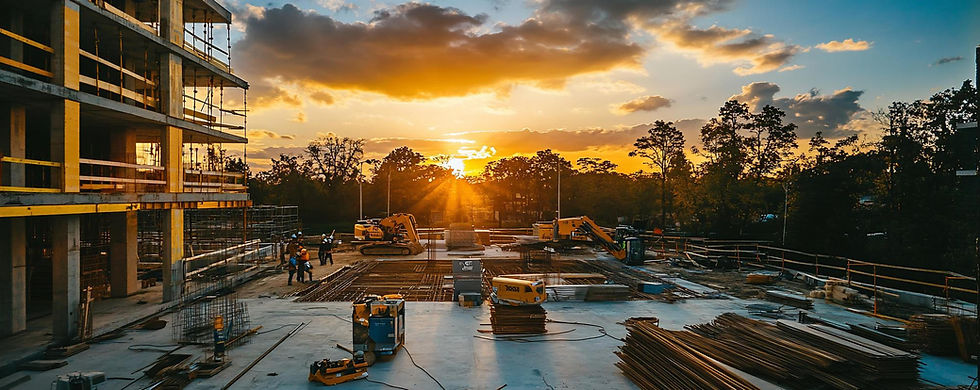
These structures strategically combine engineered timber products, like Cross-Laminated Timber (CLT) and Glulam (glued laminated timber), with steel and concrete to leverage the best properties of each. Think of a building with a concrete core for stability, a steel frame for primary support, and massive timber floors and columns that are lightweight, sustainable, and incredibly strong.
You only need to look at the heart of Sydney to see this transformation in action. Landmark projects like the Atlassian Central tower and the striking timber buildings at Barangaroo are powerful statements of intent.
They showcase how hybrid timber is not just a niche idea but a viable, and often superior, choice for large-scale commercial and mixed-use developments. The momentum building through 2025 is clear, and the reasons are compelling. Developers and builders are chasing ambitious sustainability targets, and timber is a powerful tool for reducing a building's embodied carbon.
Beyond the green credentials, the practical benefits are undeniable. Prefabricated timber components arrive on-site ready to be craned into place, dramatically speeding up installation times, reducing on-site waste, and creating a quieter, safer work environment.
The New Skill Requirements These Projects Demand
This move towards engineered timber and hybrid systems means the old way of doing things is no longer enough. The skills that were once sufficient for a standard concrete pour or steel frame erection don't fully translate to the precision required for a large-scale timber build.
Getting a team on-site now means ensuring they understand everything from the specific tolerances of timber connections to the intricate requirements of fire and acoustic separation in these unique structures. The need for enhanced training isn't a future problem; it's a present-day necessity for any builder wanting to compete in this space.
Timber Frame Assembly at Scale
Working with large-format engineered timber like CLT panels and Glulam beams is a different discipline from traditional carpentry. These components are manufactured off-site to millimetre precision and arrive ready for installation.
The critical skill on-site is the ability to handle these massive elements safely and assemble them according to complex plans. It requires an understanding of rigging, crane coordination, and specialised fixing techniques.
Unlike stick-framing, there is very little room for error. A mistake in sequencing or a poorly executed connection can cause significant delays and structural issues. Teams need to be adept at reading detailed fabrication drawings and executing the assembly with absolute accuracy, ensuring every panel and beam fits perfectly within the broader steel or concrete structure.
Fire Rating and Fire-Resistant Systems
Fire performance in mass timber buildings depends on correct installation. Teams must understand how the material behaves under heat, including its natural charring rate, and how to fit the full fire-protection system around it.
This includes fitting fire-rated plasterboard, applying intumescent coatings, and correctly sealing every penetration for services like plumbing and electrical conduits. A tiny gap or an improperly sealed joint can compromise the entire fire rating of a wall or floor.
Adherence to Australia's National Construction Code (NCC) is a life-safety requirement that demands meticulous attention to detail from a properly trained crew.
Acoustic & Vibration Control for Mixed-Use Buildings
In a mixed-use building, where a quiet apartment might be located directly above a bustling retail space, acoustic performance is non-negotiable. Timber structures transmit sound and vibrations differently from concrete, demanding specialised techniques to ensure peace for occupants.
This is where skilled labour makes a huge difference. Workers must be proficient in installing acoustic insulation, creating isolated "floating floors," and using specialised brackets and seals to prevent sound from travelling between units.
Poor workmanship in this area can lead to major problems after handover, resulting in costly remedial work and unhappy tenants. It’s a craft that requires precision and a solid understanding of how sound moves through a building's structure.
Hybrid Connection Techniques
The strength of a hybrid building lies in its connections, known as the points where timber meets steel or concrete. These connections are highly engineered and require a specific skill set to execute correctly.
Labourers need to be proficient with a range of specialised fasteners, from self-tapping screws that can be over a metre long to bolted steel plates and custom-designed brackets. The tolerances are incredibly tight.
Workers must be precise with their measurements and diligent in ensuring every connection is tightened to the correct torque and specification. There's no "close enough" in this type of work; the structural integrity of the entire building depends on the quality of these hybrid junctions.
Prefabrication & On-Site Assembly Workflows
The efficiency of hybrid timber construction comes from its reliance on prefabrication. While this moves a lot of the work off-site, it places a different kind of pressure on the on-site team. The core skill shifts from fabrication to logistics and assembly.
A competent crew must be able to expertly interpret detailed 3D models and assembly drawings to understand exactly how the "kit of parts" fits together. This involves more than just bolting pieces; it requires meticulous planning.
The team needs to coordinate just-in-time deliveries to a tight urban site, sequence the erection of components in the correct order, and ensure the entire workflow runs smoothly. One logistical error can bring the whole assembly process to a halt, undermining the key speed advantage of using prefabricated systems.
How Labouraix Is Upskilling Workers for This New Wave of Projects
At Labouraix, we see these changes not as a challenge, but as an opportunity to provide builders with a better, more prepared workforce. We're not just waiting for the industry to catch up; we're actively upskilling our crews to meet the specific demands of hybrid timber and mixed-use projects head-on.
Our approach is built by builders, for builders, which means we focus on practical, on-the-ground skills that make a real difference to your project's timeline and quality.
We've implemented targeted training programs that go beyond basic inductions. Our focus areas include:
Practical Timber Training: We partner with industry experts to provide hands-on training in handling and installing CLT and Glulam, focusing on safe crane operation, specialised fixing methods, and reading complex fabrication drawings.
Fire Compliance Workshops: Our teams receive specific instruction on installing fire-rated systems in timber structures, ensuring they understand the latest standards and techniques for sealing penetrations and fitting protective boards correctly.
Acoustic Installation Best Practices: We train workers on the nuances of acoustic separation in mixed-use buildings, covering everything from installing resilient mounts to properly sealing junctions to prevent sound transfer.
By investing in our people, we ensure that when you get a Labouraix crew on your site, you’re getting reliable workers who are ready for the job at hand. It’s a straightforward service designed to give you a skilled, work-ready team without the runaround, so you can focus on delivering the next generation of Sydney's landmark buildings.


Comments